
In the ever-evolving world of search engine optimization, one thing remains constant: user experience is king. As we move deeper into 2026, Core Web Vitals continue to play a crucial role in how websites rank on Google—but the way they are evaluated and prioritized has evolved.
If you’re a business owner or marketer trying to stay competitive online, understanding Core Web Vitals in 2026: What Actually Matters Now is essential. This guide breaks down what’s changed, what still matters, and how you can optimize your website to improve both rankings and conversions.
What Are Core Web Vitals?
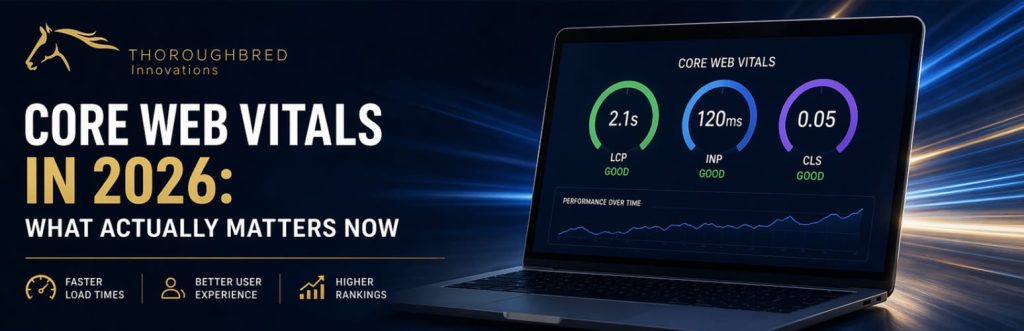
Core Web Vitals are a set of performance metrics introduced by Google to measure real-world user experience. These metrics focus on how fast your website loads, how responsive it is, and how stable the layout appears during loading.
As of 2026, the three primary Core Web Vitals are:
- Largest Contentful Paint (LCP) – Measures loading performance
- Interaction to Next Paint (INP) – Measures responsiveness (replaced FID)
- Cumulative Layout Shift (CLS) – Measures visual stability
You can explore Google’s official breakdown here:
👉 https://web.dev/vitals/
What’s Changed in 2026?
1. INP Has Fully Replaced FID
One of the biggest updates is the full transition from First Input Delay (FID) to Interaction to Next Paint (INP).
- FID only measured the delay before a user’s first interaction.
- INP measures all interactions across a page session.
👉 This means Google now evaluates how your site performs throughout the entire user experience, not just the first click.
2. Real User Experience Data Matters More
Google has doubled down on field data (real user data) rather than lab tests.
Tools like:
- Google PageSpeed Insights
- Chrome User Experience Report (CrUX)
…now prioritize how actual users experience your site—not just simulated conditions.
3. Performance Alone Isn’t Enough
In 2026, Core Web Vitals are no longer just about speed—they’re about holistic user experience.
Google now weighs:
- Mobile usability
- Accessibility
- Navigation clarity
- Engagement signals
This means a fast site that’s confusing to use can still underperform in search rankings.

Why Core Web Vitals Still Matter for SEO
Let’s be clear: Core Web Vitals are not the only ranking factor—but they are a critical differentiator.
Here’s why:
- Faster websites reduce bounce rates
- Better UX increases conversions
- Google favors sites that keep users engaged
At Thoroughbred Innovations, we’ve seen firsthand how optimizing Core Web Vitals can dramatically improve both rankings and lead generation. Learn more about our web optimization services here:
👉 https://thoroughbredinnovations.com
Breaking Down the 3 Core Web Vitals in 2026
1. Largest Contentful Paint (LCP)
What it measures:
How long it takes for the largest visible element (like a hero image or headline) to load.
2026 benchmark:
- Good: Under 2.5 seconds
- Needs improvement: 2.5–4 seconds
- Poor: Over 4 seconds
How to improve LCP:
- Optimize images (use WebP or AVIF formats)
- Use a fast hosting provider
- Implement lazy loading
- Minimize render-blocking resources
2. Interaction to Next Paint (INP)
What it measures:
How quickly your site responds to user interactions (clicks, taps, typing).
2026 benchmark:
- Good: Under 200 milliseconds
- Needs improvement: 200–500 ms
- Poor: Over 500 ms
How to improve INP:
- Reduce JavaScript execution time
- Break up long tasks
- Use efficient event handlers
- Optimize third-party scripts
3. Cumulative Layout Shift (CLS)
What it measures:
How stable your page layout is during loading.
2026 benchmark:
- Good: Less than 0.1
- Needs improvement: 0.1–0.25
- Poor: Over 0.25
How to improve CLS:
- Set explicit dimensions for images/videos
- Avoid inserting content above existing elements
- Use stable font loading strategies
The Connection Between Core Web Vitals and Conversions
Here’s where most businesses miss the point:
Core Web Vitals are not just about rankings—they directly impact your revenue.
A slow or unstable website leads to:
- Lost leads
- Frustrated users
- Lower trust
A high-performing website, on the other hand:
- Builds credibility
- Keeps users engaged
- Drives more conversions
If your website isn’t converting visitors into customers, it may be time for a redesign. Check out how we help businesses turn their websites into lead-generating machines:
👉 https://thoroughbredinnovations.com/website-design
Mobile-First Performance Is Non-Negotiable
In 2026, more than 70% of web traffic comes from mobile devices.
Google uses mobile-first indexing, meaning your mobile performance is what determines your rankings.
Key mobile optimization tips:
- Use responsive design
- Minimize pop-ups
- Optimize tap targets
- Improve load speed on cellular networks
For more insights on mobile optimization, visit:
👉 https://developers.google.com/search/docs/fundamentals/mobile-first-indexing
Tools to Measure Core Web Vitals
To stay competitive, you need to monitor your performance regularly.
Here are the top tools in 2026:
🔧 Google PageSpeed Insights
- Provides lab + field data
- Actionable recommendations
🔧 Google Search Console
👉 https://search.google.com/search-console
- Core Web Vitals report
- Tracks real-world performance issues
🔧 Lighthouse (Chrome DevTools)
- In-depth performance audits
- Great for developers
Common Mistakes Businesses Make
Even in 2026, many websites still struggle with basic performance issues.
1. Overloading with Plugins
Too many plugins = slower load times and poor INP.
2. Ignoring Mobile Experience
Desktop looks great—but mobile is broken.
3. Unoptimized Images
Large image files are one of the biggest performance killers.
4. Cheap Hosting
Low-quality hosting leads to slow server response times.
How Thoroughbred Innovations Can Help
Optimizing Core Web Vitals requires more than just technical tweaks—it requires a strategic approach to web design, development, and SEO.
At Thoroughbred Innovations, we specialize in:
- Performance optimization
- Conversion-focused design
- SEO-driven website development
Whether you need a full redesign or performance improvements, our team can help you build a website that not only ranks—but converts.
👉 Get started today: https://thoroughbredinnovations.com/contact
Final Thoughts: What Actually Matters Now
To summarize, Core Web Vitals in 2026: What Actually Matters Now comes down to this:
- Speed still matters—but experience matters more
- INP is now a critical metric
- Real user data drives rankings
- Mobile performance is essential
- Optimization directly impacts conversions
If your website isn’t meeting these standards, you’re not just losing rankings—you’re losing business.
Ready to Improve Your Website Performance?
Don’t let a slow or outdated website hold your business back.
👉 Visit https://thoroughbredinnovations.com to learn how we can help you optimize your Core Web Vitals and grow your online presence.